
The theme of the new issue of the Innovations and Practices magazine is “DENTISTRY 2030”. While preparing this feature, we were looking not simply for a modern dental unit, but for an example of how dentists’ work will be organised in the coming years. It quickly became clear that the key question is not how many new technologies will appear in the dental office. There will be many. Perhaps even an intimidating number. What matters far more is whether they can work as a single system without making day-to-day practice more complicated. That is why we chose Anthos dental units as our example. The philosophy behind this equipment is built not around individual functions, but around organising a workspace where digital technology supports the dentist without demanding constant attention.
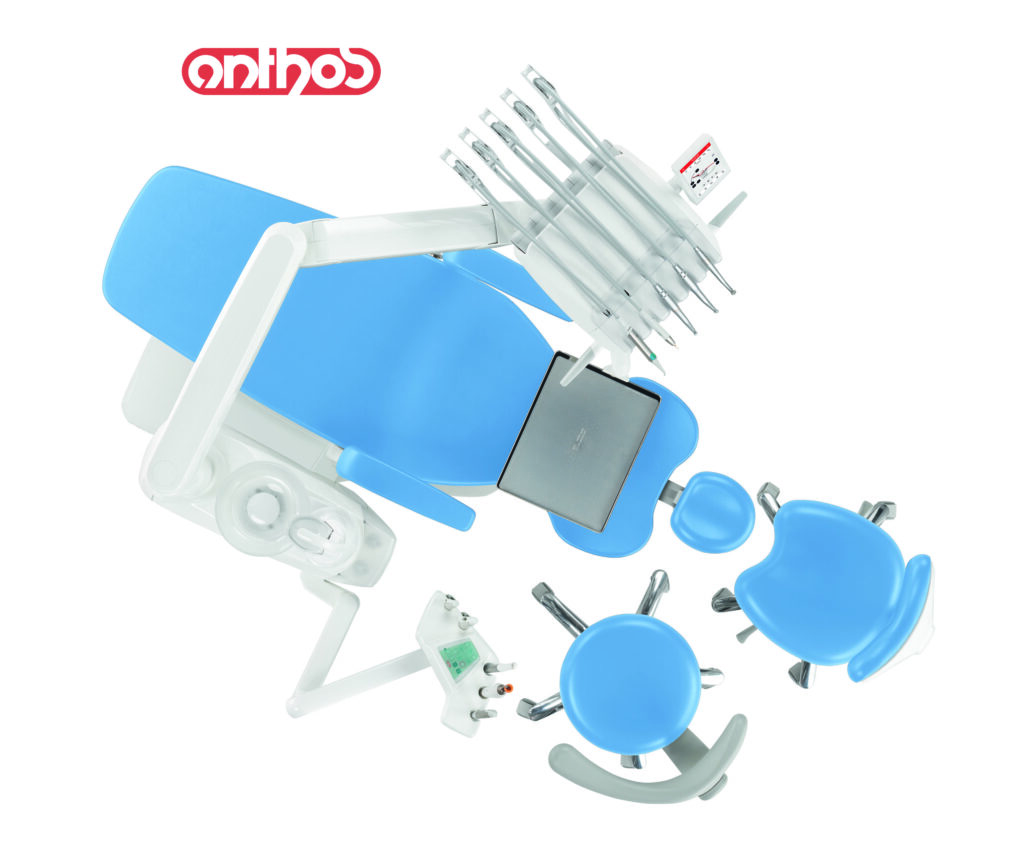
In this article, Anthos is not so much a range of specific models as an opportunity to see what the next-generation dental workspace is becoming. We look at solutions that are already reducing routine tasks and making daily practice more precise and convenient.
TECHNOLOGY SHOULD NOT BE A DISTRACTION
All key Anthos functions are integrated into a digital system. Diagnostics, imaging, therapeutic and surgical procedures, data management and hygiene protocols are all available from a single workspace. There is no need to constantly switch between separate devices and interfaces.
At the centre of the system is the 7″ Full Touch Multimedia panel. It controls the instruments, chair, treatment parameters, images and hygiene functions.
The interface follows the logic of modern mobile devices, making it easy to learn. It supports HD imaging, image and video display, as well as saving and loading individual settings via USB.
In clinics with several practitioners, each dentist can use a personalised workflow. Anthos replaces multiple separate control points with one interface, reducing the number of actions unrelated to treatment.
All key functions are integrated into a single digital system. The FULL TOUCH MULTIMEDIA 7” panel is the control centre for instruments, the chair, treatment parameters and data.
The interface is intuitive and can be customised for each practitioner. This makes it easier to navigate the functions, reduces workload and helps the dentist focus on the patient rather than searching for the right button.
All essential settings and data are always close at hand, while the system’s operating logic reflects real clinical workflows. This simplifies the training of new specialists and helps the team work more smoothly together.
CONTROL WITHOUT UNNECESSARY MOVEMENT
Even a unified system still needs to be controlled. The next step, therefore, is to minimise the effort required for control.
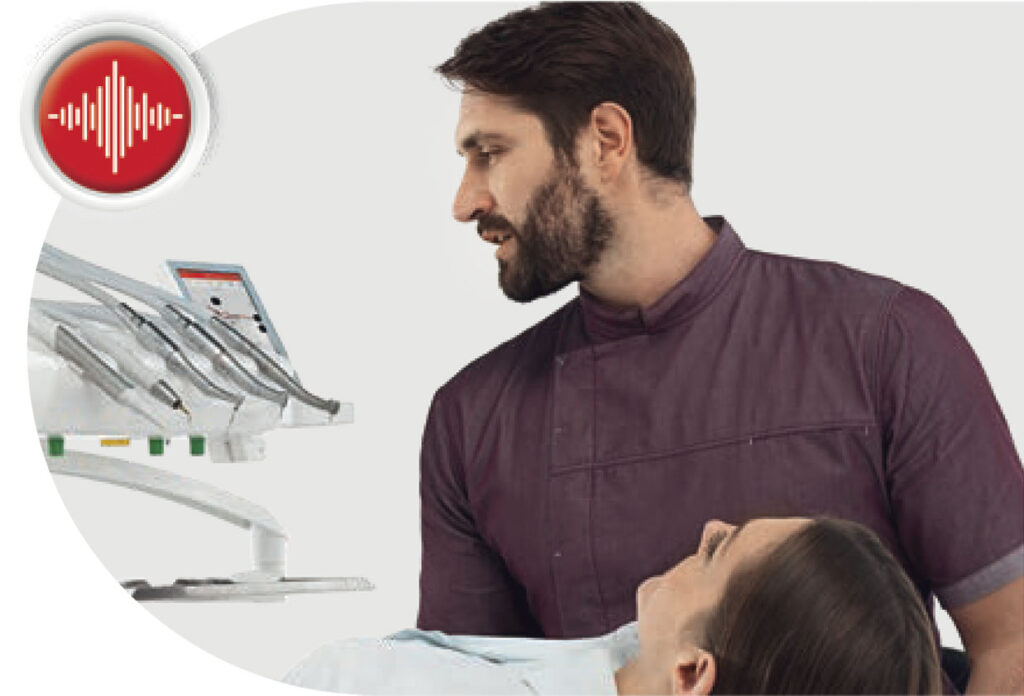
Voice commands can be used to control the micromotor, scaler and operating light, and to activate programmed chair movements. This function is especially useful when working without an assistant, during precision procedures and in situations where physical contact with the equipment needs to be reduced.
The NFC personalisation system addresses another repetitive task. The unit recognises the practitioner via an NFC wristband and automatically loads the chair position, instrument parameters, interface and workflows. There is no need to restore familiar settings before every appointment.
The system supports up to 20 user profiles. For a clinic with many dentists, this means rapid switching between practitioners, fewer errors when preparing the workspace and a predictable start to every appointment.
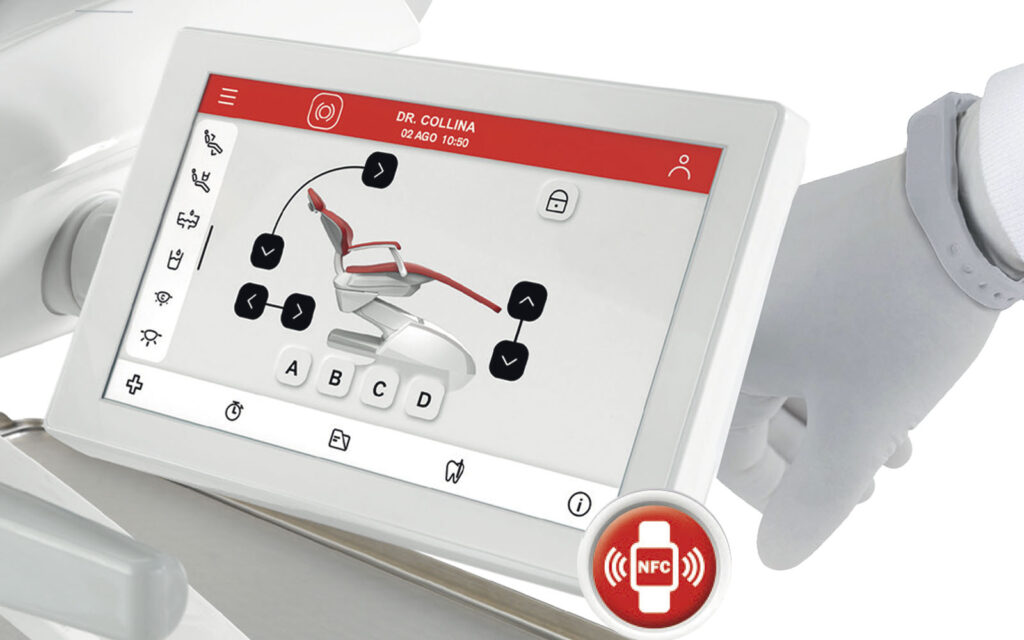
Voice commands and an NFC wristband make it possible to control the unit and automatically load personal settings.
The dentist can activate instruments, change modes and save preferences without being distracted from treatment. This saves time and makes the treatment process smoother. The technology adapts to the practitioner’s habits and helps maintain a high level of concentration throughout the appointment.
WHEN ONE-SIZE-FITS-ALL SOLUTIONS ARE NO LONGER ENOUGH
The more specialised a dentist’s practice, the more specific the requirements placed on the equipment. In endodontics, continuous control of working length and instrument behaviour is essential; in implantology, precise control of speed, torque and irrigation is critical. Today, therefore, a versatile dental unit does not mean the same set of functions for everyone, but the ability to adapt to different clinical workflows.
For endodontic treatment, Anthos integrates a dedicated micromotor with Autostop, Autoreverse and Autoforward functions, as well as an optional apex locator. Key parameters are shown on the Full Touch panel, while the ENDO system helps monitor proximity to the root apex.
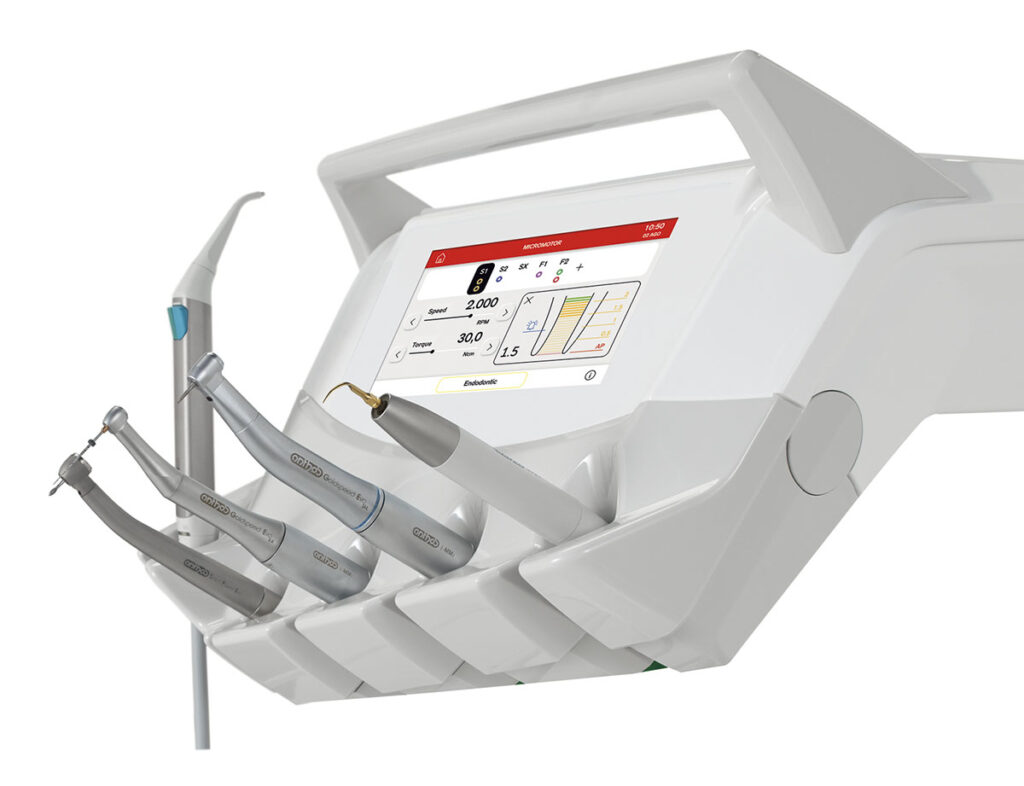
The Apex-Stop function automatically stops micromotor rotation at a preset point. This allows the system to take over part of the routine monitoring, while the practitioner can focus more closely on the clinical situation and sequence of actions.
In the surgical configuration, a brushless micromotor, peristaltic pump and surgical handpiece are integrated into a single system. Speed, torque and irrigation parameters can be saved, while the Torque Curves graph helps monitor and document the course of the procedure.
Integrated endodontic and implantology solutions provide precise control of parameters and enhance procedural safety.
The system helps the dentist monitor key indicators in real time, reduce risks and achieve consistent results even in complex clinical situations.
Reliable feedback and well-designed algorithms make every stage of work clear and predictable.
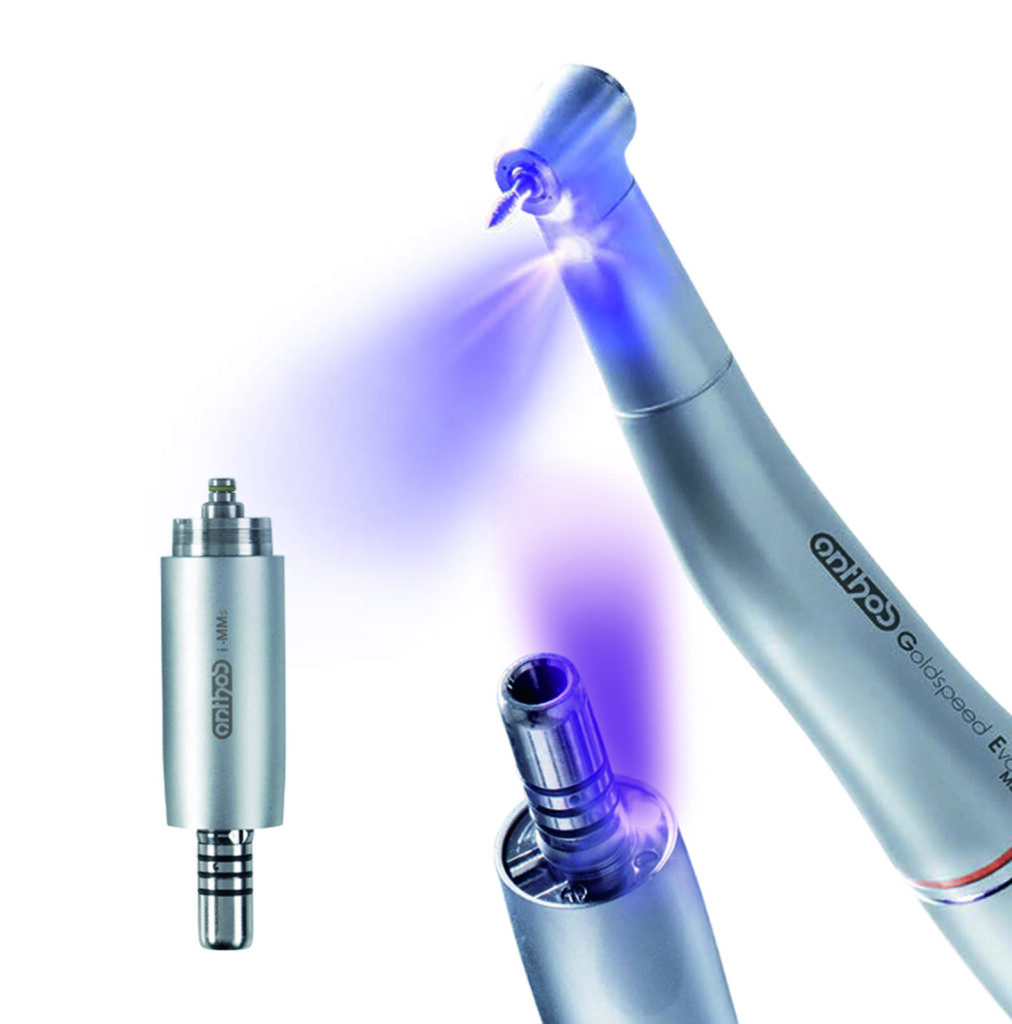
The i-MMs micromotor delivers torque of up to 70 N·cm. The EVO R20L contra-angle handpiece is designed for autoclaving and thermal disinfection, and for reliable performance in complex clinical scenarios.
Component integration reduces the number of external modules and allows key parameters to be controlled directly from the system.
ERGONOMICS AS A PREREQUISITE FOR PRECISION
Even the most advanced digital tools cannot compensate for fatigue. The longer an appointment lasts, the harder it is to maintain concentration: an uncomfortable posture and unnecessary movements gradually affect the precision of clinical procedures. Ergonomics is therefore not an optional comfort feature, but a prerequisite for consistent work.
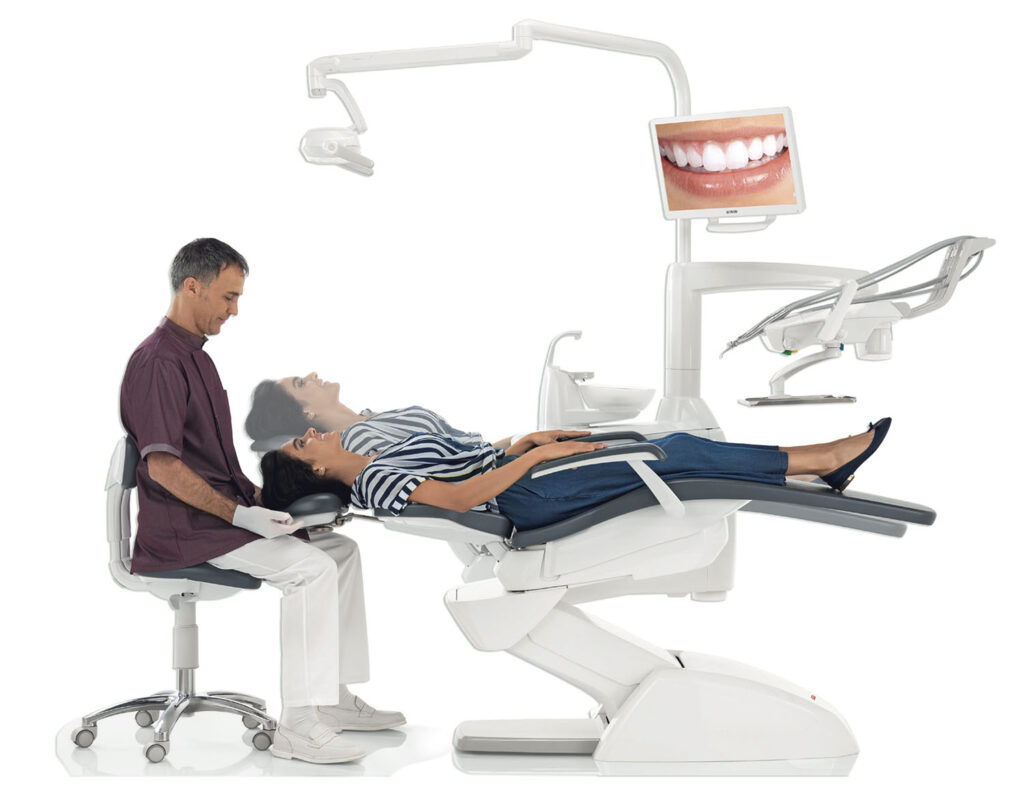
In Anthos, the chair design and Sliding Movement mechanism help maintain a familiar working zone. The chair position can be changed without constantly readjusting the light and instruments: the working field remains organised and unnecessary movements are reduced.
Soft Motion technology, together with the optional Slow Mode, provides smooth, precise chair movement that is virtually imperceptible to the patient. This is particularly important when working under a microscope and during implant procedures, where even a slight shift can disrupt the course of a precise manipulation.
Well-designed ergonomics reduce physical strain and help practitioners maintain a stable working posture, precision and concentration for longer, including during complex and lengthy procedures.
The ergonomic chair design and smooth movements help reduce strain and maintain precision throughout the appointment.
The sliding function, soft start and instrument arm position improve access to the patient and support a natural working posture for the dentist.
Comfortable positioning and well-designed kinematics support longer periods of work without fatigue and help improve treatment quality.
TRUST STARTS WITH UNDERSTANDING
After diagnosis comes another challenge: explaining the clinical situation so that the patient understands the rationale behind the proposed treatment. The more visual the discussion, the less room there is for misunderstanding and the easier it is to make a shared decision.
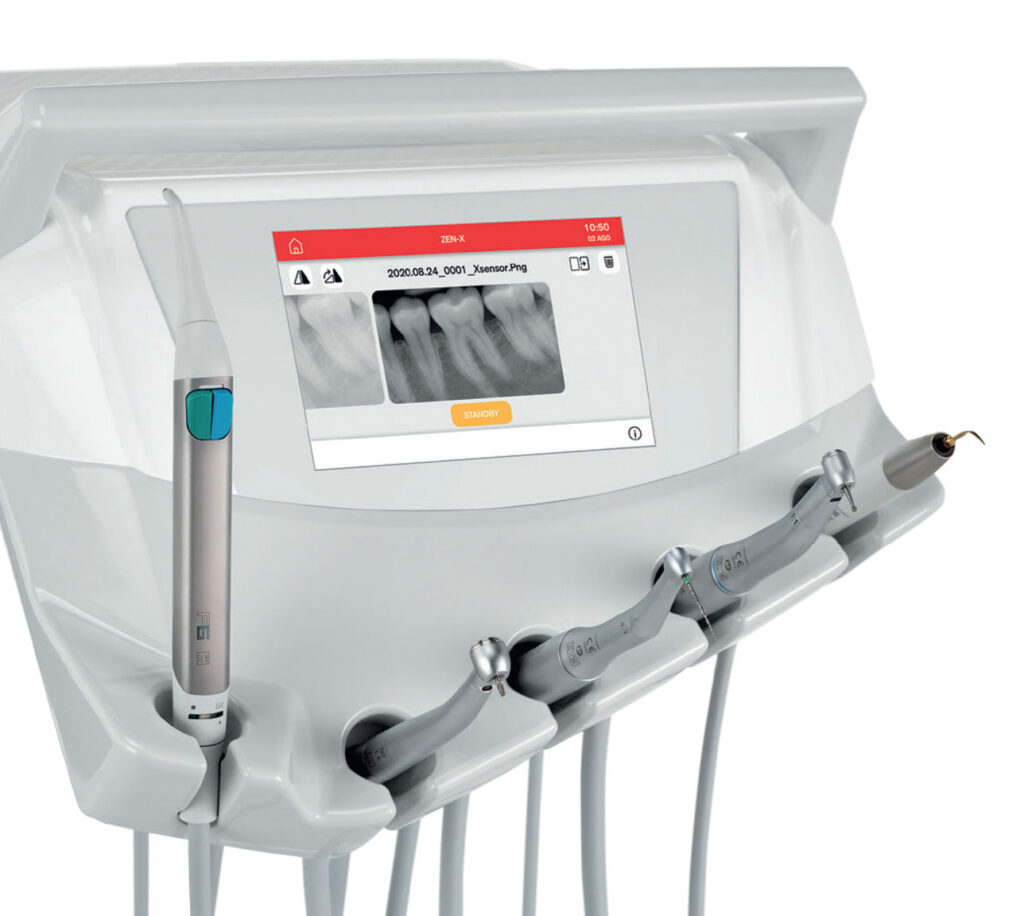
An integrated high-resolution camera, a 22-inch Full HD monitor, the ability to display up to four images simultaneously and connectivity for the Zen-X X-ray sensor make visual communication part of the clinical workflow.
X-rays, images and treatment stages can be shown directly during the appointment. Instead of listening to a lengthy explanation, the patient sees the same clinical picture on which the practitioner bases the assessment. This visual approach also changes the nature of the treatment conversation itself.
Visual communication becomes part of the workflow, and the patient sees the same clinical picture used by the dentist.
The HD camera, intraoral camera and integration with the Zen-X X-ray sensor provide clear images and convenient image comparison.
Understanding the diagnosis and treatment plan builds patient trust and supports informed decision-making.
It becomes easier for patients to ask specific questions, compare options and understand the dentist’s reasoning. Communication is no longer a one-way explanation and becomes part of shared decision-making.
As a result, communication is clearer and more transparent, and the patient becomes more involved in the treatment process.
THE NEW LUXURY IS SIMPLICITY
The more technologically advanced dentistry becomes, the more valuable simplicity becomes. Not the simplicity that comes from limited capabilities, but the kind that is the result of a complex, well-designed system.
In the coming years, clinics will face a new challenge: not simply acquiring modern technologies, but managing the growing complexity of their own digital environment. There will be more equipment and more software solutions, while the boundaries between diagnostics, treatment and data management will gradually disappear. The likely winners will not be those who pack the maximum number of innovations into the treatment room, but those who can make their use a natural part of everyday work.
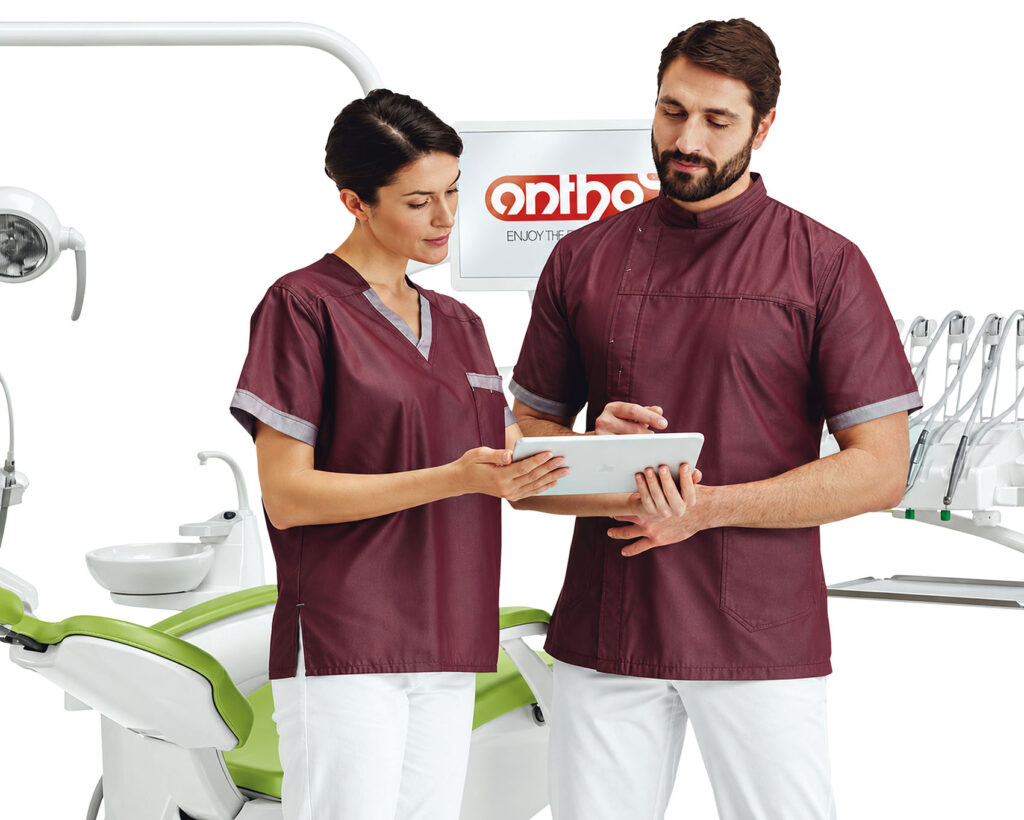
This also changes the very idea of what it means to be technologically advanced. Perhaps we will judge the equipment of the future by how rarely we notice its presence. The best solutions do not demand constant study, monitoring and adaptation from the user; on the contrary, they adapt themselves to the practitioner’s familiar way of working.
In this sense, the dental office of the future does not necessarily mean even more screens, devices and functions. Its defining feature may be exactly the opposite: the more complex the technology inside, the simpler the work on the outside.


