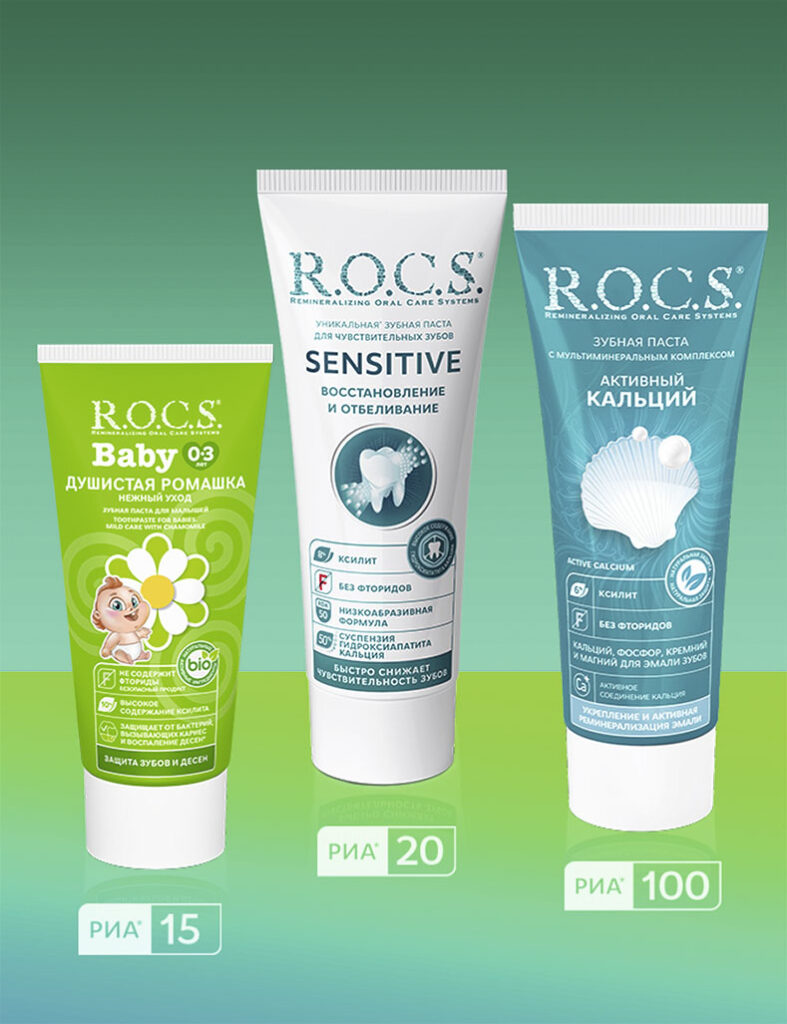
As of today, the abrasiveness of oral hygiene products in Russia is not regulated in any way. There was only one method for evaluating abrasivity, RDA, in the world, but it has high radioactivity, low accuracy of results, and is available for execution in only one laboratory in the USA. Therefore, for many years, the RDA values on packaging were often theoretical in nature, and the actual abrasiveness of the pastes remained in question. Moreover, after 2022, access to the foreign laboratory became practically impossible. This only emphasized that the Russian market requires its own modern, accurate, and secure methodology.
Abrasiveness is one of the key parameters of any toothpaste. She is responsible for cleaning the surface of the teeth, which is the main preventive property of all toothpastes. However, both excessively low and excessive abrasiveness of toothpaste have their drawbacks. Low abrasiveness may not be effective enough for cleaning the tooth surface, while too high abrasiveness causes sensitivity, wedge-shaped defects, and enamel damage even among young people. This indicator is especially important for children: their enamel is thinner and more vulnerable, so excessive abrasive load causes damage much more quickly.
In recent years, the prevalence of non-carious lesions of hard dental tissues has increased by 25.9%, and the proportion of patients with weakened enamel has also grown. Moreover, in 2022, there was an urgent need to create domestic abrasives for toothpaste production. At the same time, the production of raw materials is impossible without technologies that allow for the control of their properties.
In December 2024, Svetlana Matelo, the head of the GC “Diarsi” (brand R.O.C.S.®), defended her doctoral dissertation “Development of an Abrasiveness Standard in Dentistry” and presented the first domestic methodology for assessing the abrasiveness of toothpastes and a new national index — RIA. The development was carried out by the Institute of Digital Dentistry, a structural unit of the Medical Institute of RUDN University and the National Research Center “Kurchatov Institute.”
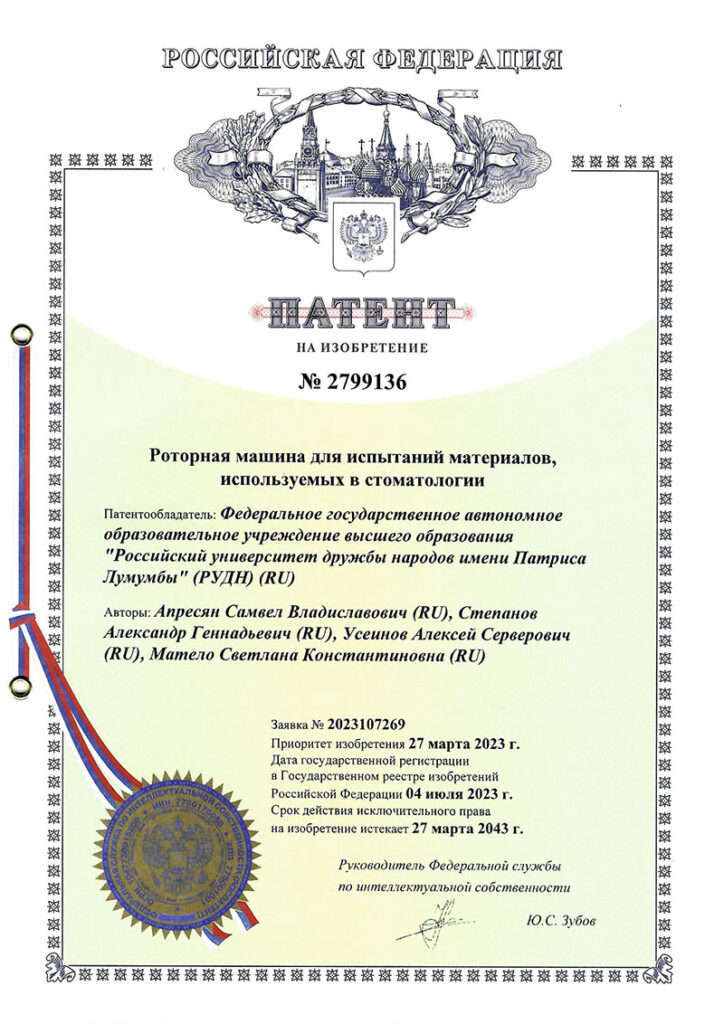
The new patented technique is completely safe, highly accurate, reproducible, and has a number of advantages compared to the RDA method. Its effectiveness has been confirmed by a large experimental-clinical study involving 534 patients. At the core of the methodology are a rotary machine and digital technologies. QLF diagnostics, intraoral scanning, and digital analysis were used in the study, which allowed for obtaining highly accurate objective data on tooth wear and the dynamic influence of abrasiveness.
It is important to note: one of the clinical conclusions was that the safe level of abrasiveness of toothpaste for sensitive teeth was previously determined incorrectly. The study showed that in cases of hyperesthesia, wedge-shaped defects, and dentin lesions, a safe level is no higher than RDA 30, whereas manufacturers previously indicated RDA 40.
Special attention in the work is given to the necessity of controlling the amount of pressure on the toothbrush during brushing, as this directly affects the health of the gums and teeth. To assess the optimal pressing force, it is recommended to use a tactile test, which helps to select a safe and effective pressure.
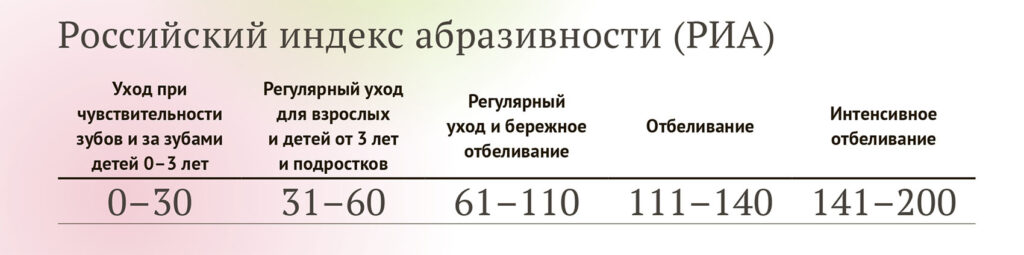
Another clinical finding concerns the abrasive impact on ceramic restorations. A study of three groups of patients with different types of ceramics showed that modern materials exhibit minimal wear — up to 2.5 micrometers per year, even when using highly abrasive pastes. Pastes with an RDA of 100–110 provide quality cleaning and gentle whitening by removing stains, and are safe for healthy teeth and metal-ceramic structures.
An important stage in the application of the new development was the testing of the entire range of R.O.C.S.® toothpastes. The studies were conducted in comparison with the results of reference samples that underwent abrasiveness testing according to the RDA scale in the USA.
All products of the brand have passed the RIA system check and confirmed the safety and accuracy of their abrasive characteristics. Thanks to this, dentists can confidently prescribe toothpaste for specific clinical tasks—sensitivity, presence of implants, mixed situations, or children’s dental care. A high degree of control and predictability of abrasiveness opens up opportunities for creating truly specialized formulas, including products that simultaneously address aesthetic and therapeutic tasks. Only R.O.C.S.® offers a whitening toothpaste for sensitive teeth with a RIA index of 20, whose effectiveness is confirmed by clinical data.
R.O.C.S.® SENSITIVE Repair & Whitening combines gentle action with high cleaning ability, is safe for long-term daily use, and provides teeth whitening by an average of 1.5 shades in one month of regular use.
The creation of the Russian abrasiveness index is not just a scientific development. This is the foundation for the formation of a national standard. High precision, lack of radioactivity, stable reproducibility, and compatibility with digital technologies ensure its recognition not only in Russia but also worldwide. Moreover, the study is of great significance not only for dentistry but also for small- and medium-scale chemistry. In particular, thanks to the development, it became possible to implement a project for the creation of powdered silica gel — the main component of all toothpastes.
Thus, the new technology ensures independence from foreign methodologies, shapes the appearance of entire industries, and creates new opportunities for Russian science.
The RIA index is present on every new package of R.O.C.S.® — use it as a guide and make smart choices for your dental health!